



For the third consecutive year, Wurundjeri Council and Royal Botanic Gardens Victoria come together to present the Indigenous Garden — a living, breathing tribute to Country, culture and connection.
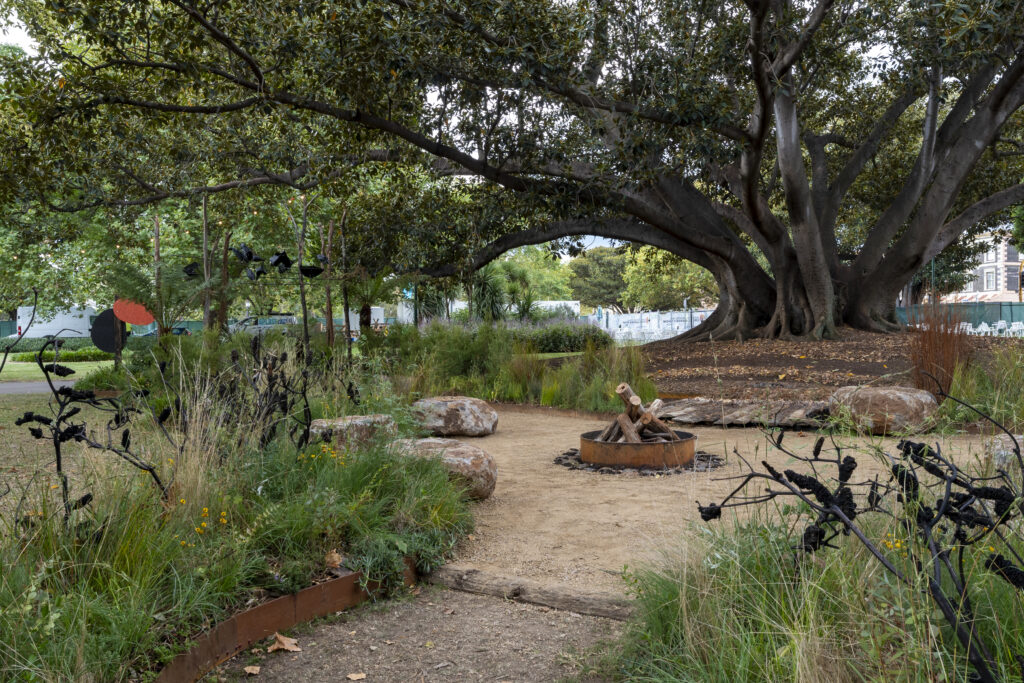
This year’s garden draws its inspiration from bolin bolin billabong, a billabong within the Yarra Flats in Bulleen and one of the most resource-rich and culturally significant landscapes in Wurundjeri Woi-wurrung Country. For countless generations, bolin bolin has been a gathering place — a site of communal feasting, trade, ceremony and the enduring bonds of community.
Each season brought its own abundance. During iuk (short-finned eel) season, Wurundjeri Woi-wurrung people converged at bolin bolin to harvest, share and celebrate — a tradition that speaks to the sophistication of Indigenous ecological knowledge and the deep reciprocity between people and place. Central to these gatherings was the buln buln (lyrebird) dance, a ceremony whose echoes carry through to the present day.
The garden you are walking through is an act of remembrance and renewal. Through carefully selected indigenous plantings, design, and living cultural practice, it asks us to look at this landscape differently — to see not just flora, but story; not just soil, but sovereignty.
Program of Events
Throughout the five days of the show, the Indigenous Garden comes alive with a rich program of talks, performances, education sessions and guided experiences — each offering a different way into the world of Wurundjeri Country and culture.
Wednesday 25 March — Opening Day
The garden opens with a Welcome to Country and Smoking Ceremony, grounding the space in proper protocol and inviting visitors into Country with respect. This is followed by a performance by Djirri Djirri, the celebrated Wurundjeri women’s dance group, whose movement and song bring the billabong landscape vividly to life. Later in the day, a Wurundjeri Education Session explores the history and culture of bushfoods and cultural artefacts — essential knowledge for understanding how Wurundjeri Woi-wurrung people have lived with and from this Country across millennia.
Thursday 26 March — Plants, Rarity & Living Collections
Thursday places the spotlight on botanical knowledge and ecological stewardship. Two Botanicals Education sessions led by Wurundjeri educators explore the deep plant knowledge embedded in Wurundjeri culture. Royal Botanic Gardens Victoria researchers share their work through two special talks: Meg Hirst presents on the Raising Rarity Program and the Cherry Ballart — a threatened native species — and Jack Dewhurst offers an inside look at Living Collections and how the Gardens cares for country through science.
Friday 27 March — Story, Season & After Dark
Friday brings an Education Session for children, with Wurundjeri Storytelling offering young visitors an age-appropriate introduction to language, landscape and lore. A dedicated session on the Iuk (eel) Season explores the seasonal cycles that shaped life at bolin bolin. At 5:30pm, the project’s design team gather for a discussion about the vision, process and future of the Wurundjeri biik bolin bolin garden itself. After dark, visitors are invited to join a Nocturnal Invertebrates Study — a chance to encounter the garden’s after-hours inhabitants.
Saturday 28 March — Design, Learning & Discovery
Saturday is rich with design thinking and collaborative dialogue. Aboriginal Learning Guides from Royal Botanic Gardens Victoria lead morning sessions, connecting visitors directly with Country and culture. In the afternoon, Petrichor Collaborative leads a Storytelling and Design Discussion exploring the intersection of First Nations knowledge and contemporary design practice. Two design talks round out the day: Andrew Laidlaw of Royal Botanic Gardens Victoria shares insights on garden design, followed by Suzannah Kennett-Lister of SKL Gardens. The evening again invites curious visitors into the garden after dark for the Nocturnal Invertebrates Study.
Sunday 29 March — Art, Garden Tours & Closing Day
The final day brings the program to a reflective close. Artist David Wong leads an Artwork, Sculptures and Design Session, exploring how creativity and culture intersect in the garden’s making. The afternoon features a Garden Tour of the Global Gardens of Peace — a fitting close to a garden whose very existence is an act of healing and recognition.
FULL PROGRAM SCHEDULE
All sessions take place within or adjacent to the Indigenous Garden. No bookings required unless otherwise noted.
Wed 25 March
- 9:00am Welcome to Country & Smoking Ceremony
- 9:30am Djirri Djirri Wurundjeri Women's Dance Group
- 12:00pm Wurundjeri Education Session: History & Culture — Bushfoods and Cultural Artefacts
- 2:00pm Wurundjeri Education Session: History & Culture
Thu 26 March
- 12:30pm Wurundjeri Education Session: Botanicals Education
- 2:30pm Wurundjeri Education Session: Botanicals Education
- 4:00pm Royal Botanic Gardens: Raising Rarity Program and the Cherry Ballart with Meg Hirst
- 4:30pm Royal Botanic Gardens: Living Collections with Jack Dewhurst
Fri 27 March
- 11:00am Wurundjeri Education Session: Children's Wurundjeri Storytelling
- 12:00pm Wurundjeri Education Session: Iuk Season
- 4:30pm Royal Botanic Gardens: Aboriginal Learning Guides
- 5:30pm Project Design Team Discussion: Wurundjeri biik bolin bolin
- 8:00pm Nocturnal Invertebrates Study
Sat 28 March
- 11:00am Royal Botanic Gardens: Aboriginal Learning Guides
- 1:30pm Petrichor Collaborative: Storytelling & Design Discussion
- 3:00pm Royal Botanic Gardens: Design Talk with Andrew Laidlaw
- 4:30pm SKL Gardens: Design Talk with Suzannah Kennett-Lister
- 8:00pm Nocturnal Invertebrates Study
Sun 29 March
- 10:30am Artwork, Sculptures and Design Session — David Wong, Artist
- 2:00pm Garden Tour: Global Gardens of Peace
ABOUT THE COLLABORATION
Wurundjeri Council
Wurundjeri Council is the representative body for the Wurundjeri Woi-wurrung people of the Kulin Nation. Wurundjeri Woi-wurrung Country encompasses much of what is now metropolitan Melbourne and extends into the Yarra Valley, the Dandenong Ranges and beyond. The Council works to protect and promote Wurundjeri culture, heritage and self-determination, and to maintain the living connection between Wurundjeri people and their Country.
Royal Botanic Gardens Victoria
Royal Botanic Gardens Victoria is one of the world’s great botanic gardens, holding living and preserved plant collections of international significance. Its Aboriginal Learning program brings First Nations ecological knowledge, language and culture into the gardens through guided experiences, education and ongoing collaborative relationships with Traditional Owners — of which this garden is a proud expression.

Three Years of Growing Together
This is the third year the two organisations have collaborated to present the Indigenous Garden at the Melbourne International Flower & Garden Show. Each year the garden has deepened its roots — in design ambition, in community participation, and in its capacity to bring non-Indigenous Australians into genuine relationship with Country and culture. We are grateful to all the Wurundjeri Elders, Knowledge Holders, educators and artists who have shared their time, stories and wisdom with visitors throughout this journey.
Visitor Information
All are welcome in the Indigenous Garden. We ask that visitors engage with this space in a spirit of respect, curiosity and openness.
Photography is welcome in the garden. Please be mindful and ask permission before photographing people.
Some cultural content shared in education sessions may be of particular significance to Wurundjeri community. Please follow any guidance given by presenters.
We acknowledge the Wurundjeri Woi-wurrung people as the Traditional Owners of the land on which this garden stands.